If you own a rental home, duplex, or small group of units in San Diego County, it is normal to worry that filing Chapter 13 will automatically cost you the property. In reality, Chapter 13 is often used to protect property while you reorganize your finances, but keeping the rental depends on equity, income, mortgage arrears, ongoing expenses, and whether your repayment plan is feasible.
You should evaluate the rental property before filing, not after. The value of the property, mortgage balance, rental income, taxes, insurance, repairs, and tenant obligations all affect the bankruptcy analysis.
Can you keep your San Diego rental property in Chapter 13?
Yes, you may be able to keep your rental property in Chapter 13 if you can propose and complete a workable repayment plan. Chapter 13 allows an individual with regular income to repay debts over a period of three to five years while retaining property. The United States Courts’ Chapter 13 overview explains that Chapter 13 is designed to help individuals keep property and pay debts over time.
Your plan must account for the rental property’s financial realities, including:
- The regular mortgage payment;
- Past-due mortgage payments, or arrears;
- Property taxes and insurance;
- HOA assessments, if applicable;
- Repairs, maintenance, and management expenses;
- Rental income and vacancies; and
- Your personal household income and expenses.
Chapter 13 does not erase the mortgage lien. Instead, it may give you a structured way to cure arrears, protect the property from foreclosure, and address other debts while you continue operating the rental.
How does Chapter 13 differ from Chapter 7 for rental property?
Chapter 13 generally offers more flexibility for an individual landlord who wants to retain real estate. Chapter 7 is a liquidation case, which means a Chapter 7 trustee reviews your assets, exemptions, liens, and equity. Non-exempt equity in a rental property can create a risk that the trustee will sell the property or seek payment equal to the non-exempt value.
Chapter 13 usually avoids that immediate liquidation risk, but it does not mean the property is ignored. Your plan must satisfy the “best interests of creditors” requirement, which generally means unsecured creditors must receive at least what they would have received if your non-exempt assets had been liquidated in Chapter 7.
The means test also matters. Rental income must be disclosed and may affect your eligibility, disposable income, and plan payment. The analysis is not based simply on the rent check you receive. Bankruptcy schedules typically examine gross rental income alongside ordinary expenses, vacancies, repairs, property taxes, insurance, and debt service. Your bankruptcy attorney must determine how the rental income is treated under the applicable forms and plan calculations.
Chapter 7 may be a better answer when the rental has little or no non-exempt equity, the mortgage is current, you do not need to cure arrears over time, or the property is creating losses that you no longer want to carry. Chapter 13 may be more appropriate when you have regular income, meaningful equity, or a realistic ability to catch up on mortgage arrears.

What does the automatic stay do for your rental property?
The automatic stay begins when you file bankruptcy and generally stops most collection activity against you and property of the bankruptcy estate. Under 11 U.S.C. § 362, the stay may stop a mortgage lender from continuing foreclosure, collecting pre-filing mortgage arrears, enforcing certain judgments, or taking other collection action involving the rental property.
For a San Diego rental property, the automatic stay may temporarily stop:
- A pending foreclosure sale;
- Collection efforts for pre-filing mortgage arrears;
- Lawsuits to collect debts from you;
- Enforcement of certain liens; and
- Other actions against you or property of the bankruptcy estate.
The automatic stay is not a permanent solution. A mortgage lender may ask the Bankruptcy Court for “relief from stay,” which is permission to continue foreclosure or other enforcement activity. Relief may be requested when the lender lacks adequate protection, the property has no equity and is not necessary to an effective reorganization, or the plan is not feasible.
The stay also does not eliminate your obligation to make post-filing payments. You must continue following the confirmed plan and remain current on obligations that come due after filing.
What happens to your tenants and existing leases?
Your tenants generally do not lose their leases simply because you file Chapter 13. An unexpired lease is generally treated as an executory contract connected to the bankruptcy estate. Under 11 U.S.C. § 365, the lease may be assumed or rejected, subject to court procedures and requirements.
If you assume the lease, you generally must address any default and provide adequate assurance of future performance. In practical terms, that means you must continue honoring the lease, maintaining the property, and complying with California landlord-tenant laws.
In Chapter 13, you generally remain in possession of your rental property and continue collecting rent. That differs from a typical Chapter 7 case, where the Chapter 7 trustee may take control of estate assets, including rental operations or lease-related interests, depending on the circumstances.
You should not stop acting as a landlord after filing. Continue to:
- Collect rent under the existing lease;
- Maintain habitable living conditions;
- Respond to repair and safety issues;
- Maintain required insurance;
- Follow California notice and eviction rules;
- Keep accurate income and expense records; and
- Deposit or account for rental income as directed by your bankruptcy plan and counsel.
Tenants should continue paying rent according to their leases unless they receive different lawful instructions. Your bankruptcy filing does not give you permission to change lease terms, remove tenants, or ignore habitability obligations.
Can Chapter 13 cure mortgage arrears on your rental?
Chapter 13 may allow you to cure mortgage arrears through your repayment plan. The arrears are the missed payments, late charges, and other amounts that were due before filing. Instead of paying the entire overdue balance immediately, the plan may spread the arrears over three to five years.
Your plan payment may therefore include:
- An amount for mortgage arrears;
- Payments on priority debts such as certain taxes;
- Trustee compensation and administrative expenses;
- Payments for other secured debts; and
- An amount for unsecured creditors based on your disposable income and liquidation analysis.
The regular mortgage payment that becomes due after filing is often treated separately from the arrears. Depending on the property, loan documents, and local practice, the ongoing payment may be paid directly to the lender or through the plan.
A rental property may also receive different treatment from your principal residence. Federal law generally restricts modification of a mortgage secured only by a debtor’s principal residence, while a loan secured by an investment property may raise different modification and valuation issues. The exact treatment depends on the loan, lien position, property value, and plan structure.
What if you are already pursuing an eviction?
A pending unlawful detainer can complicate the bankruptcy case. If you are in the middle of evicting a tenant in San Diego Superior Court when you file Chapter 13, you should not assume that the case can simply proceed as usual or that the filing automatically resolves the eviction.
The automatic stay primarily protects you and property of the bankruptcy estate. Whether and how it affects a landlord’s pending unlawful detainer may depend on the claims asserted, the stage of the case, possession of the property, and whether the state-court action involves the debtor or estate property. Notify your bankruptcy attorney and the state court promptly, and obtain advice before serving notices, requesting a writ, or taking possession.
If the tenant, not you, files bankruptcy, the analysis changes. A tenant’s bankruptcy may stay collection of pre-filing rent and may pause an unlawful detainer, although federal law includes exceptions for certain pre-filing judgments for possession and evictions based on property endangerment or illegal drug use. Review the California eviction and landlord-tenant resources before taking action.
Which property expenses continue after you file?
Bankruptcy does not pause the basic costs of operating a rental property. You remain responsible for protecting the asset and complying with legal obligations.
Plan for:
- Post-filing mortgage payments;
- Property taxes and assessments;
- Landlord and liability insurance;
- HOA dues and special assessments;
- Utilities you are required to provide;
- Repairs and habitability work;
- Property management costs; and
- Licensing or inspection requirements.
Property taxes that become due after filing can receive special treatment under the Bankruptcy Code, but they do not simply disappear. HOA assessments and insurance premiums can also create post-filing obligations. Failing to budget for these costs can make an otherwise workable Chapter 13 plan fail.

How can a Broker-Attorney help you choose a property strategy?
A rental property bankruptcy decision is also a real estate decision. The property may be worth keeping, selling before or during the case, or surrendering to the lender. Each option affects tenants, equity, taxes, creditors, and your long-term finances.
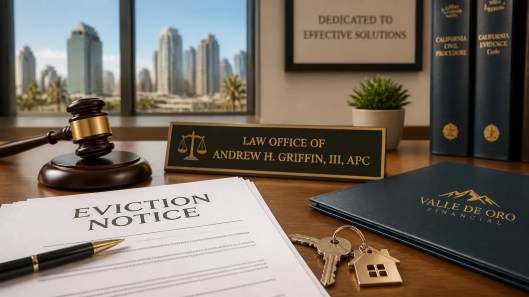
The Law Office of Andrew H. Griffin, III, APC has served San Diego County since 1983. The firm is led by Andrew H. Griffin, III, a California-licensed real estate broker and experienced bankruptcy attorney. That dual background can help you evaluate:
- Current market value in your San Diego County neighborhood;
- Mortgage balances and lien priority;
- Equity after selling costs;
- Whether rental income is sufficient;
- Whether a sale could fund a plan or resolve arrears;
- Tenant and lease considerations;
- Potential tax and transaction issues; and
- Whether keeping, selling, or surrendering the property best fits your goals.
You can also review the firm’s bankruptcy services, real estate services, and San Diego bankruptcy resources.
What should you gather before a Chapter 13 consultation?
Bring complete information about both your personal finances and your rental operation:
- Deeds and recent mortgage statements;
- Property tax records;
- HOA statements;
- Insurance declarations;
- Current leases and rent ledger;
- Bank statements showing rent deposits;
- Repair and maintenance records;
- Property management agreements;
- Any foreclosure or collection notices; and
- Any pending unlawful detainer documents.
If the property is owned by an LLC or corporation, disclose that immediately. Chapter 13 is for individuals, and your personal filing does not automatically place property owned by a separate business entity into your personal bankruptcy estate.
It is normal to feel uncertain when your rental property supports your household but also carries debt. A careful review can show whether Chapter 13 is a path to preserving the property, restructuring the arrears, or creating an orderly sale strategy.
For a bankruptcy consultation with the Law Office of Andrew H. Griffin, III, APC, schedule through Calendly. You may also call 619 853-3009 or text 619 330-5456. The firm offers English and Spanish communication, 24/7 accessibility, and guidance for individuals, families, and property owners throughout El Cajon and greater San Diego.
This article provides general information and is not a substitute for legal advice. The effect of Chapter 13 on your rental property depends on your ownership structure, property value, liens, leases, income, expenses, and the facts of your case.